
Homelessness in Fairfax County
Homelessness in Fairfax County is rising. Understanding why is the first step toward ending it.
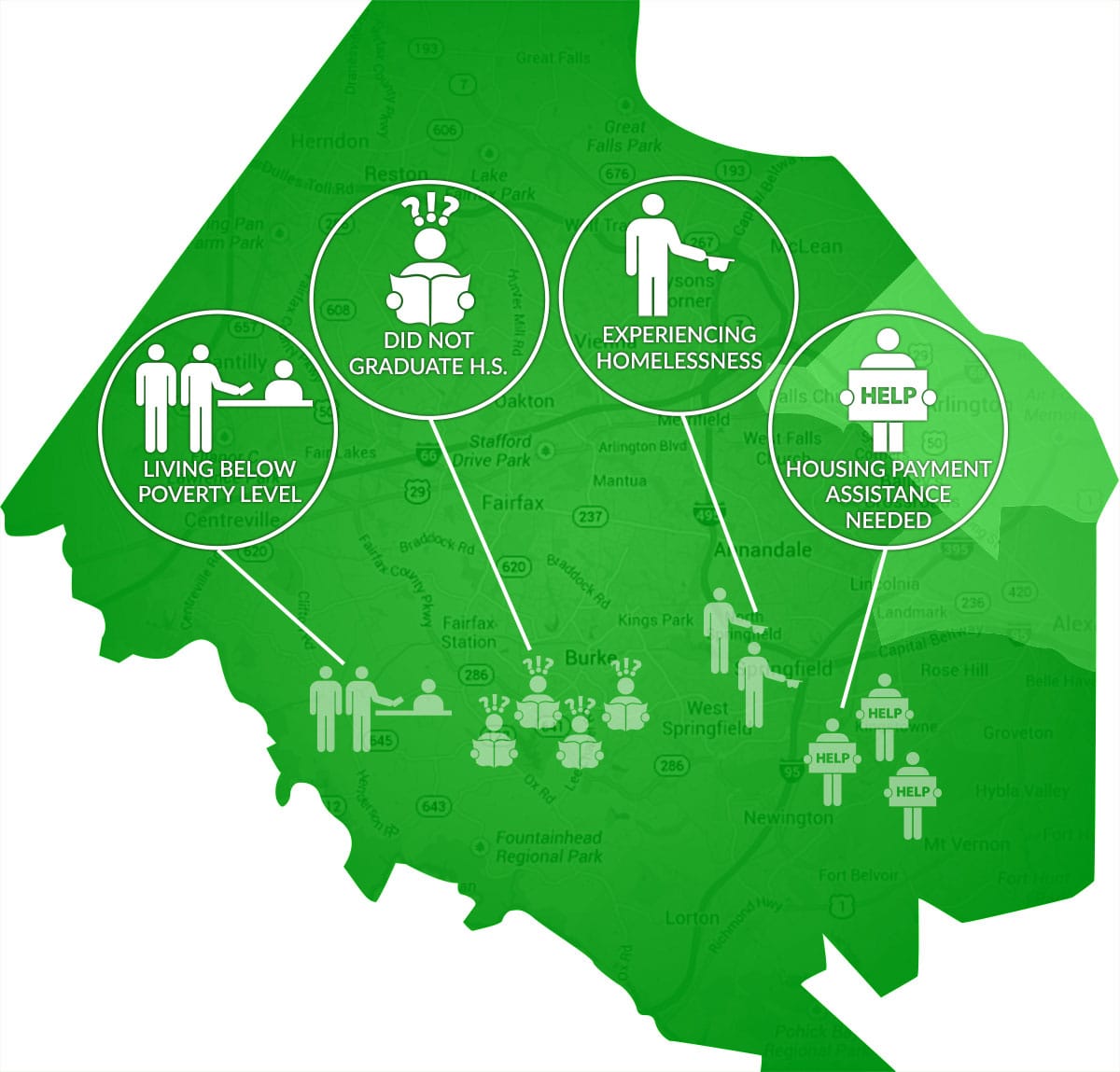
A Snapshot of Homelessness in Fairfax County
The 2026 Point-in-Time Count identified 1,365 people experiencing homelessness in Fairfax County — a 3% increase from 2025 and a 32% rise since 2019. Of those counted, 327 adults — 24% of all adults counted — were identified as chronically homeless, up from 263 the prior year. Veterans experiencing homelessness increased by 5 people, which is a 19% increase. It's important to remember that a single night's count only tells part of the story — over the full federal fiscal year 2025, 3,572 people were served in shelters across Fairfax County, reflecting the depth of need in our community.
Source: Fairfax County 2026 Point-in-Time Count, fairfaxcounty.gov
Barriers to Housing

Affordability
The fair market rent in the Fairfax area for a two-bedroom apartment is $2,314 per month, according to HUD — nearly double what it was just a few years ago, and the highest of any county in Virginia. Real-world market rents are even steeper, with one-bedrooms averaging over $2,100 and two-bedrooms over $2,500 per month. For a single parent working full time to afford even a one-bedroom without being cost-burdened, they would need to earn well over $40 per hour.

Disability
Many people experiencing homelessness have a disability that affects their ability to earn a living. Even those receiving Supplemental Security Income receive only a fraction of what is needed for housing stability.

Income and Education
Approximately 69,300 people in Fairfax County — nearly 6% of all residents — live below the poverty line, according to the most recent U.S. Census Bureau estimates. Over 83,000 adults aged 25 and older in Fairfax did not graduate high school. Together, these income and education gaps create the conditions that lead to homelessness. People earning minimum wage earn only about a quarter of what is needed to afford a two-bedroom apartment in our community. Most have incomes below the federal poverty threshold.

Mental Health and Wellness
Many of our guests are navigating serious mental health challenges — and doing so without the stability of a home, a support system, or access to consistent care. With the right resources and a community that believes in them, people can and do find their footing. At The Lamb Center, we walk alongside our guests through those challenges every step of the way.

Credit
Many apartment complexes, landlords and owners require a renter to have a great credit score. Divorce, medical issues, poor decision-making and other factors can lead to deterioration of credit and can prevent people from securing housing.

Transportation
Lack of transportation can hinder one’s ability to go to work, take one’s children to day care or doctor’s appointments, or to other essential places that contribute to stability. The result is often catastrophic and can lead to homelessness.